

Composite comes from the Latin word “componere“. Composite materials are created when two or more substances are combined (physically, not chemically). This creates a new material with special and superior properties.
A fundamental advantage of composite materials is extreme flexibility in shape and strength.
Numerous benefits
We harness the innovative potential of fiberglass and composite materials to deliver a range of unmatched benefits. Our dedication to quality, sustainability, and safety, paired with the long-lasting durability of these materials, distinguishes us in the market. Join us on a journey to redefine industries and shape a sustainable, high-performance future.
Quality
Our products are crafted from fiberglass and composite materials, ensuring exceptional quality and consistency throughout.
Eco-friendliness
We take pride in our commitment to the environment. Our use of fiberglass and composites reflects our eco-friendly approach, as these materials are often recyclable and contribute to reducing environmental impact.
Security
Discover the enhanced security that fiberglass and composite materials offer. From improved insulation to resistance against fire and impact, our products prioritize your safety.
Functionality
Experience versatility like never before. Fiberglass and composites can be molded into complex shapes, making them suitable for a wide range of applications, from aerospace to construction.
Durability
Our fiberglass and composite products are built to last. They can withstand harsh weather conditions, corrosion, and wear and tear, guaranteeing you durability and longevity.
Long-life
Invest in products that stand the test of time. Thanks to their long life span, fiberglass and composite materials require less maintenance and replacement, saving you time and money.
Lightweight
When weight matters, fiberglass and composites shine. Their lightweight nature makes them ideal for applications where weight savings are crucial, such as automotive and aerospace industries.
Resistance to Corrosion
Count on our products to resist corrosion and rust, making them perfect for marine and outdoor applications.
Customizability
Tailor-made solutions are at your fingertips. Fiberglass and composites can be customized to meet your specific requirements, offering design flexibility like no other.
Energy Efficiency
Experience improved energy efficiency in construction and transportation. Our use of fiberglass and composites contributes to better insulation and reduced weight.
Low Maintenance
Say goodbye to frequent maintenance. Our fiberglass and composite products boast low maintenance requirements, reducing downtime and operational costs.
Cost-Effectiveness
While the initial investment may be higher, the long-term cost-effectiveness of fiberglass and composite materials makes them a wise choice for various industries.
Endless Applications

The properties of composite materials depend on the characteristics of their components—matrices, reinforcements, hardeners, and additives—as well as on the production methods and manufacturing conditions.
This makes the possibilities endless!
In recent years, composites have increasingly replaced traditional materials such as steel, wood, and concrete across a wide range of applications. Industries like aerospace, transportation—including aircraft, trains, and ships—and defense now rely heavily on composite materials.
Composite materials offer a significant advantage due to their recyclability, which can be achieved both through processed methods and without them. When recycled, these materials often retain properties comparable to the original, and in some cases, their performance can even improve compared to the raw materials.
Amazing Properties of Composite Materials
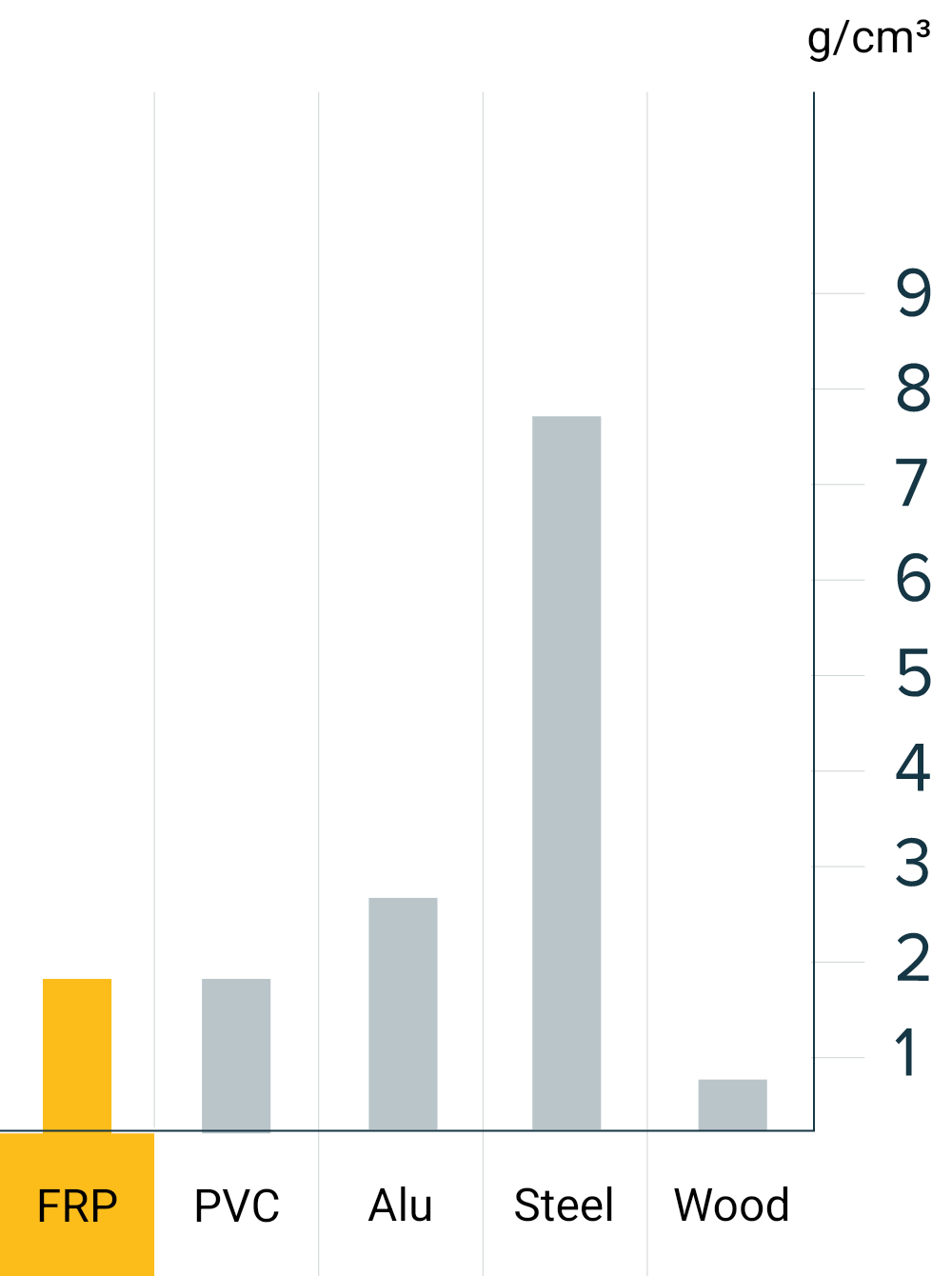
Weight-bearing Capacity

Tensile Strength

Modulus of Elasticity

Longitudinal Extension Strain
Environmental Responsibility
Composite materials, specifically Fiber Reinforced Polymers (FRPs), offer environmentally friendly options due to their recyclability.
They can be recycled through various methods, both with and without additional processing. Even when recycling is not feasible, these materials naturally biodegrade over time, returning to the environment.
Recycling often results in composite materials with properties comparable to—or in some cases even better than—the original raw materials.
At Scan-Plast, we take environmental responsibility seriously. That’s why we accept our own manufactured products for recycling, demonstrating our ongoing commitment to sustainability and environmental preservation.
Additional Characteristics
- High specific stiffness
- High specific strength
- Chemical resistance
- Corrosion and temperature resistance
- Low weight
- Good fatigue and shrinkage properties
- Attractive surface finish and a wide range of colors
- Low-cost design optimization
- Directionally customized properties
- Minimal maintenance
- Noise-absorbing and flexible
- Thermally and electrically insulating
- Anti-magnetic and moisture-repellent
- Non-magnetic with a low coefficient of thermal expansion
- Easy on-site machining and assembly
- Electromagnetically transparent
Energy Consumed Manufacturing

Thermal Conductivity

Technical Information
Delve into the technical nuances of composite materials by checking out our supplementary PDF. This resource provides an in-depth look at the properties and applications of composites—perfect for anyone seeking a deeper understanding.